
On a recent trip to the sleepy little town of Strasburg, Pennsylvania, we had the opportunity to observe two restaurants that surprised us by showcasing how technology is quietly but powerfully modernizing the dining experience not just for the customer, but for the business owner managing the risk behind the scenes.
While many fear that technology takes away from the human aspect of the dining culture, these two establishments nestled in the rolling hills of the Amish country proved that by moving their businesses into the future they could still thrive all the while keeping their small-town charm.
Strasburg, PA, widely known as “Train Town, USA,” and for its proximity and association with the Amish Community in Lancaster County boasts the oldest short-line railroad in the United States; offering scenic rides throughout the breathtaking countryside, along with the Railroad Museum of Pennsylvania celebrating its’ 50th Anniversary! Visitors young and old flock to the Choo Choo Barn and National Toy Train Museum.
For two weeks, twice a year, Strasburg is also home to “A Day Out with Thomas and Friends” (you might remember him as “Thomas the Tank Engine”), an affordable, unique, family fun event that all Thomas-lovers should experience at least once in their lifetime; which brings us to why we were in the small town on Father’s Day Weekend this year with our three-year-old.
In a town with only three restaurants that served dinner, we found the local brewery to be a hidden gem. The brewery had implemented the ‘Toast app’ allowing patrons to browse the menu, place orders, and keep an open ticket all from their own smartphones. The hostess who seated us called it an “English Pub Style” and in many ways it did bring us back to ten years ago when we had been inside an actual English pub where there were no traditional waitstaff taking orders. Instead, bartenders and food runners took center stage keeping things moving and efficient.
From a customer’s perspective, especially while traveling with a little one, the experience was more convenient and less stressful. There was no waiting around to flag down a server. Orders were placed for drinks and food when we were ready, and food arrived hot and quickly. This model eliminated some of the unpredictability that comes with the human element of service; the food was delicious, and when our toddler was done for the night, we closed out our own tab. It was easy and very efficient.
As insurance professionals, we couldn’t help but notice the underlying operational shift. Having less traditional waitstaff on payroll which in turn means a reduction in payroll-driven exposures, particularly workers’ compensation. By reallocating roles toward food runners and kitchen staff, businesses can reduce turnover risks and streamline labor, while maintaining or even enhancing service and product quality.
The second technologically advanced small business we found in Strasburg was a modern coffee shop with a farm-stand feel, that used puck-based in-house GPS technology. Wherein the customer ordered at the counter, they seated themselves and food was brought to us without needing any traditional waitstaff. While the wait was estimated at 20–25 minutes once your order was placed, the time passed easily thanks to the quick delivery of our beverages, a play area for kids, and a welcoming atmosphere. The experience felt just as personal—if not more efficient—than a traditional sit-down model.
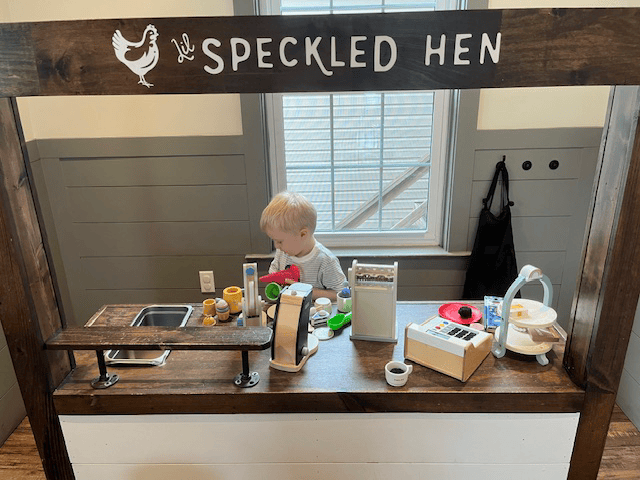
Our son, along with several other children was entertained by their own personal barista station, and had the weather been more cooperative, the kids could have been running about on a very nice playground outdoors. While he played, we were free to enjoy our absolutely delicious brunch and local coffee at our leisure while still keeping an eye on his activities.
From a risk management lens, the coffee-house setup, along with that of the brewery reduces reliance on front-of-house staff and instead centralizes efforts in areas that can be controlled and optimized. The risks don’t disappear but they shift. Less payroll means potentially lower comp premiums. Fewer human variables in the service process means less margin for operational error. There are still exposures, of course; burns, slips, equipment risks but a leaner front-end team can often result in tighter operations.
These observations also touch on broader themes such as efficiency, wage fairness, and tipping culture. As customers face higher dining costs, the expectation of tipping 18–20% can feel out of step with the value received, especially when service becomes more self-directed. If restaurants can pay higher base wages to fewer, more efficient staff, tipping can become optional rather than expected, aligning customer expectations with employee compensation in a sustainable way.
Technology isn’t removing the human element; it’s refining it and reallocating where that human value is most impactful. From an insurance standpoint, it’s a fascinating shift: one that reduces traditional risks, increases operational consistency, and opens up conversations around how we insure, compensate, and protect the modern hospitality workforce.